Why listening bars are suddenly everywhere
A Japanese habit from the 1920s has opened in Brighton, Gowanus, Neukölln and Peckham in about ten years. Here is what I think happened.
Ten years ago, if you wanted to sit in a room built around a stereo, you went to Tokyo. Now there is one in Brighton. There are several in Berlin. Lisbon has them, Melbourne has them, and Brooklyn has enough of them to argue about which is best. Something clearly happened, and I do not think it was one thing.
The original reason was money
The Japanese version started for a very boring reason. After the war an imported jazz record cost something close to a month of rent, and almost nobody had a system worth playing it on. A cafe could afford both. So it bought the records, bought the speakers, and sold you a seat in front of them with a coffee.
Everything people now treat as ceremony comes out of that. You do not choose the music because it was never your collection. You do not talk because the chairs face the speakers and there is nothing else to do. It was an economic arrangement first and became a culture afterwards, which is usually the order these things happen in.
Then music became free and lost its shape
Here is what I think changed. When everything ever recorded became available immediately, for the price of a sandwich per month, the scarce thing moved. It stopped being the music. Nobody is short of music. What is short is the conditions: a room that was tuned, a person who decided what happens next, and other people in the room paying attention at the same time as you.
You cannot buy that with a subscription. You can only walk into it. And once that became obvious, opening a bar where the system is the point stopped looking eccentric and started looking like a business.
The equipment got weirdly available
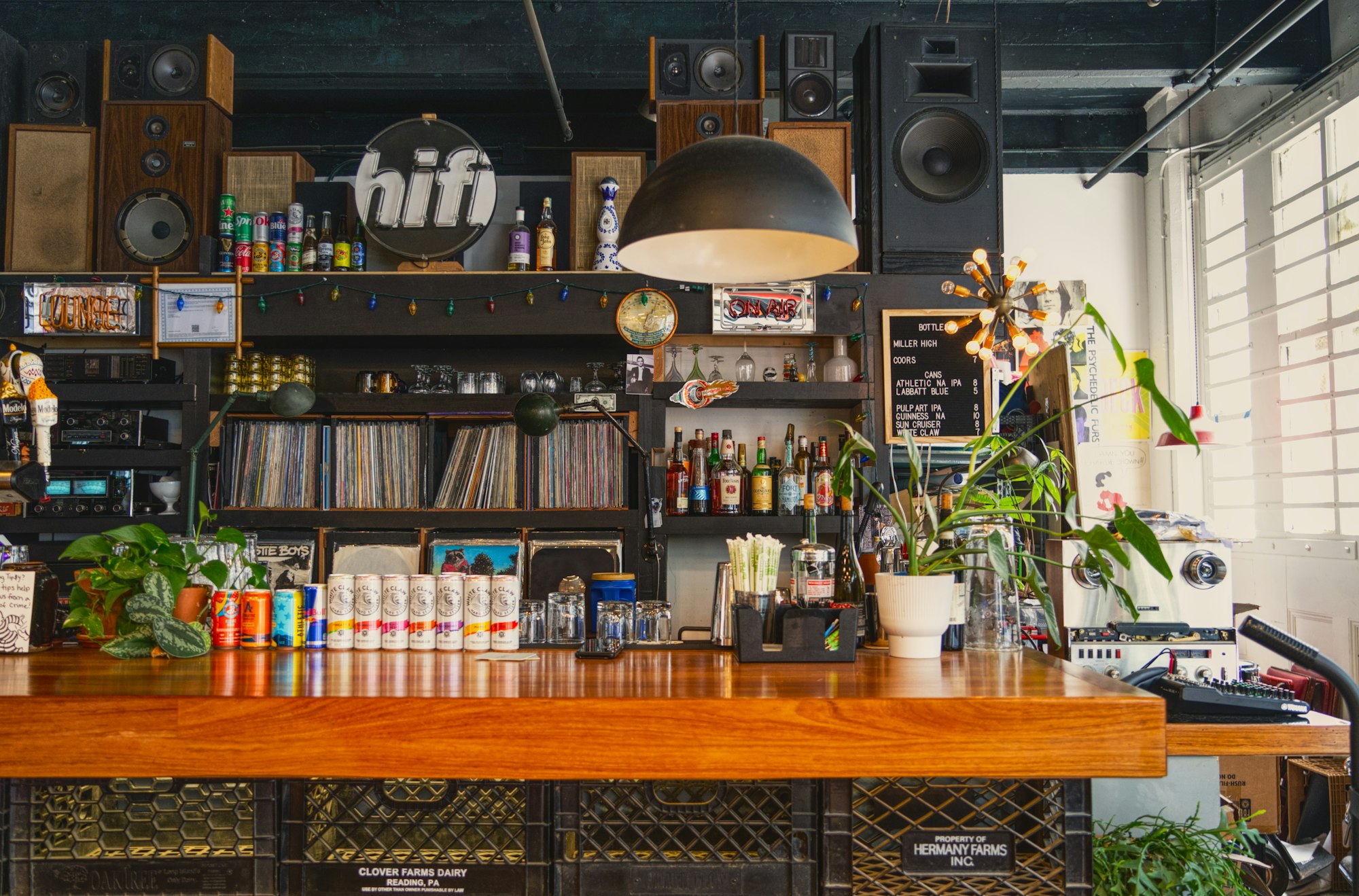
There is a practical piece too. For about thirty years, big vintage horn speakers and old valve amplifiers were something you inherited or found in a skip. Nobody wanted them. They are enormous, they are heavy and they were deeply unfashionable.
That inventory sat around long enough to become cheap, and then a generation of people who grew up on laptop speakers heard one and had a fairly straightforward reaction to it. A pair of horns from 1975 in a small room is not subtle. It does not need explaining.
Vinyl is not nostalgia, it is a constraint
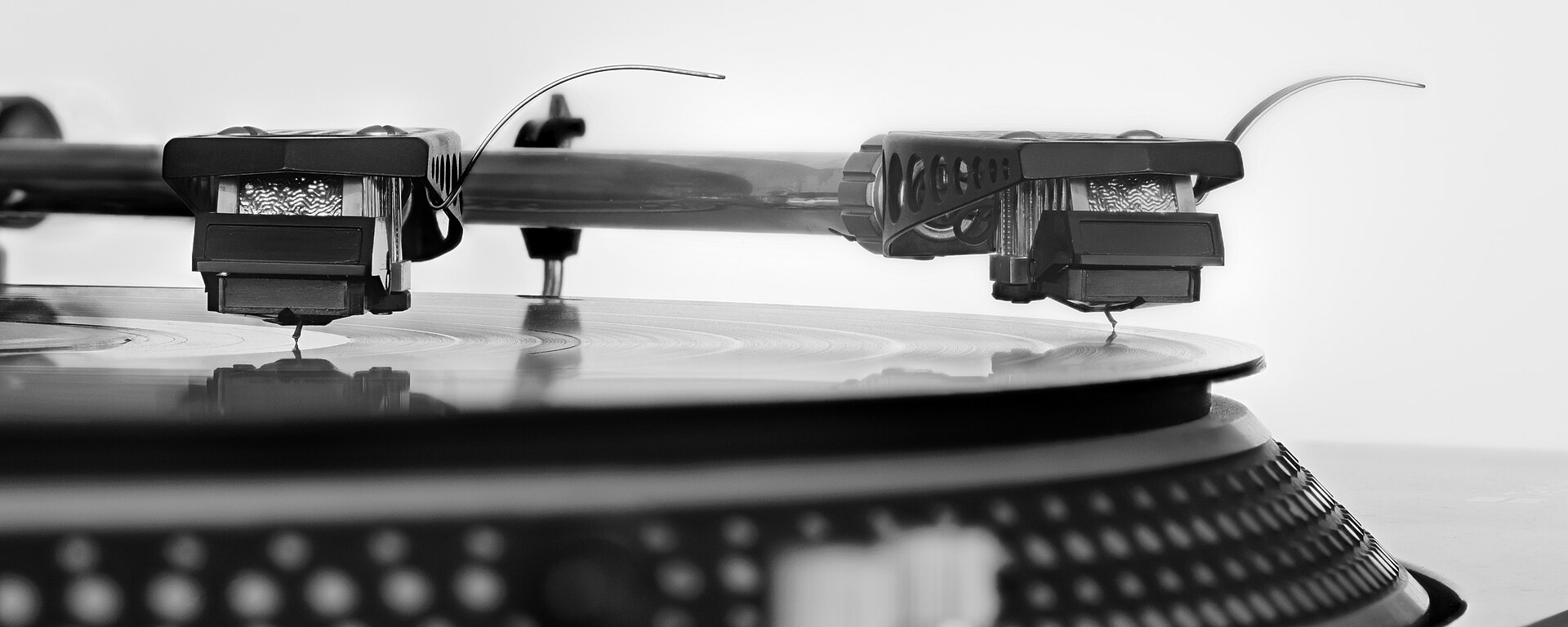
People assume the records are about romance. Some of it is. But the useful part is that a side ends after about twenty minutes and somebody has to get up and decide what happens next, in front of witnesses.
That single limitation produces an evening with a shape. A playlist never ends and therefore never has an argument in it. A person choosing records has to commit, and commitment is what you are actually listening to.
And restaurants noticed
The last piece is less romantic. Hospitality is a hard business and everybody is looking for a reason to be worth the trip. A serious system is a reason, and it turns out to pair well with the other things that are working right now, natural wine and small plates and rooms that do not shout.
Which is why the format has spread in two directions at once. There are the strict rooms, the ones that behave like a small cinema. And there are the loud ones with a kitchen, where you can talk and the record is still the reason you came. Both count. That is why every entry on this site says which one you are walking into, because getting that wrong is the fastest way to have a bad night.
None of this is a revival. Chigusa in Yokohama has been open since 1933 and never went anywhere. What is new is that the rest of us finally worked out what it was for.